
Your cart
There are no more items in your cart
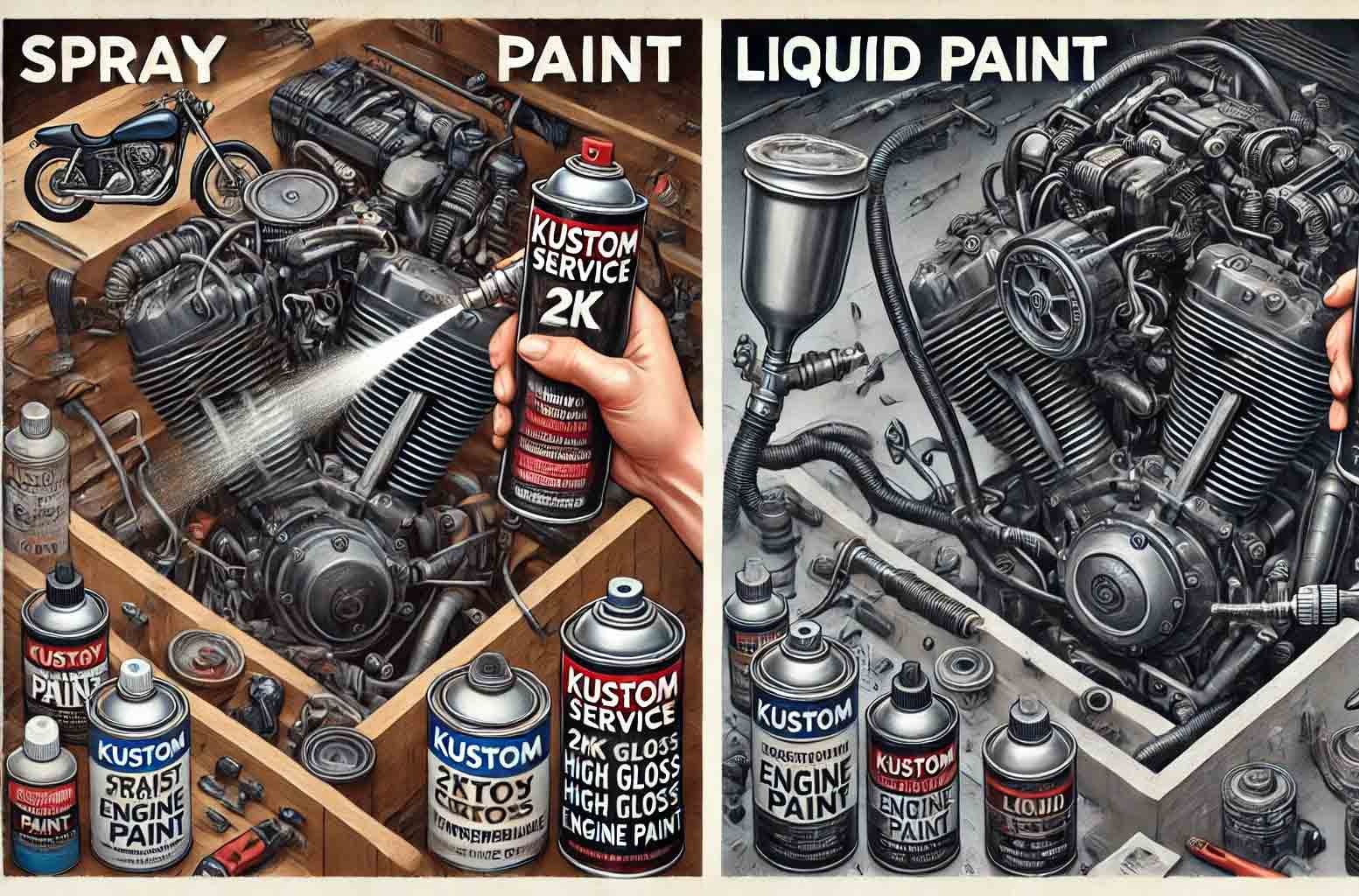
Painting a motorcycle engine can be a rewarding and visually satisfying DIY project. Whether you are looking to refresh the appearance of your motorcycle or protect the engine from rust and corrosion, choosing the right painting method is fundamental. In this article, we will explore two of the most common options: spray paint and liquid paint. We will analyse the pros and cons of each method to help you make an informed decision.
Spray Paint
Pros
Ease of application: Spray can paint is easy to apply, even for those with no experience. It requires no special tools beyond the can itself, making the process simpler and more accessible.
Fast drying time: Spray paint tends to dry more quickly than liquid paint. This allows multiple coats to be applied in a relatively short time.
Uniform coverage: The spray can allows for uniform distribution of the paint, reducing the risk of runs and build-up.
Wide range of colours: Spray paints are available in a vast range of colours and finishes, including matte, gloss and metallic.
Cons
Need for thorough preparation: The surface must be meticulously prepared to ensure the paint adheres correctly and lasts over time.
Emission of toxic fumes: Applying spray paint requires a well-ventilated area to avoid inhaling toxic fumes.
Kustom Service Professional 2K Spray Engine Paint
One of the best options available on the market is the Kustom Service professional 2K gloss black high-temperature engine spray paint. This product is specifically designed for painting motorcycle, car and marine engines, guaranteeing exceptional resistance to high temperatures and petrol. This paint features an internal capsule containing the catalyst, which is released by pressing a button on the bottom of the can. Once activated, it must be used within 12 hours, or can be stored in a refrigerator for a maximum of 3 days. Thanks to its elastic properties, it withstands sudden thermal changes, making it ideal for variable conditions.
Liquid Paint
Pros
Durability and resistance: Liquid paints, especially those formulated for high temperatures, tend to be more resistant and long-lasting. They are ideal for engines that reach elevated temperatures.
Professional finish: Liquid paint can provide a smoother and more professional finish, especially when applied with a compressor and spray gun.
Greater control over application: With liquid paint, it is possible to better control the thickness and consistency of the coverage.
Cons
Longer application time: Applying liquid paint requires more time and patience, as it is necessary to use tools such as brushes or spray guns.
Tools required: Unlike spray paint, liquid paint requires additional tools for application, which can increase the cost and complexity of the project.
Longer drying time: Liquid paint takes longer to dry completely, which can extend the overall time of the project.
Steps for Painting the Engine
Preparation
Regardless of the chosen method, thorough preparation is essential. Here are some key steps:
Engine cleaning: Remove all dirt, grease and rust from the engine surface. You can use a specific engine cleaner and a wire brush.
Masking: Cover all parts you do not want to paint with masking tape and paper. Make sure to properly protect sensitive areas such as air intakes and electrical components.
Sanding: Use sandpaper to sand the engine surface. This helps the paint adhere better.
Painting
Spray Paint
- Shake the can: shake the can well for at least one minute before use
- Apply a base coat: spray a metal-specific primer to ensure better paint adhesion
- Painting: apply the spray paint keeping the can at a distance of approximately 20–30 cm from the surface. Use wide, uniform movements
- Drying: allow each coat to dry for the time indicated in the can instructions
Liquid Paint
- Prepare the paint: mix the paint well and, if necessary, dilute it following the manufacturer's instructions
- Apply the primer: use a brush or spray gun to apply a coat of primer
- Painting: apply the paint with a fine-bristle brush or spray gun. If using a gun, make sure to set an adequate pressure to avoid runs
- Drying: allow each coat to dry completely before applying the next. This may take longer than spray paint
Finishing
Once the paint is completely dry, remove the masking tape and masking paper. Check the surface for any imperfections and, if necessary, lightly sand and apply an additional coat of paint.